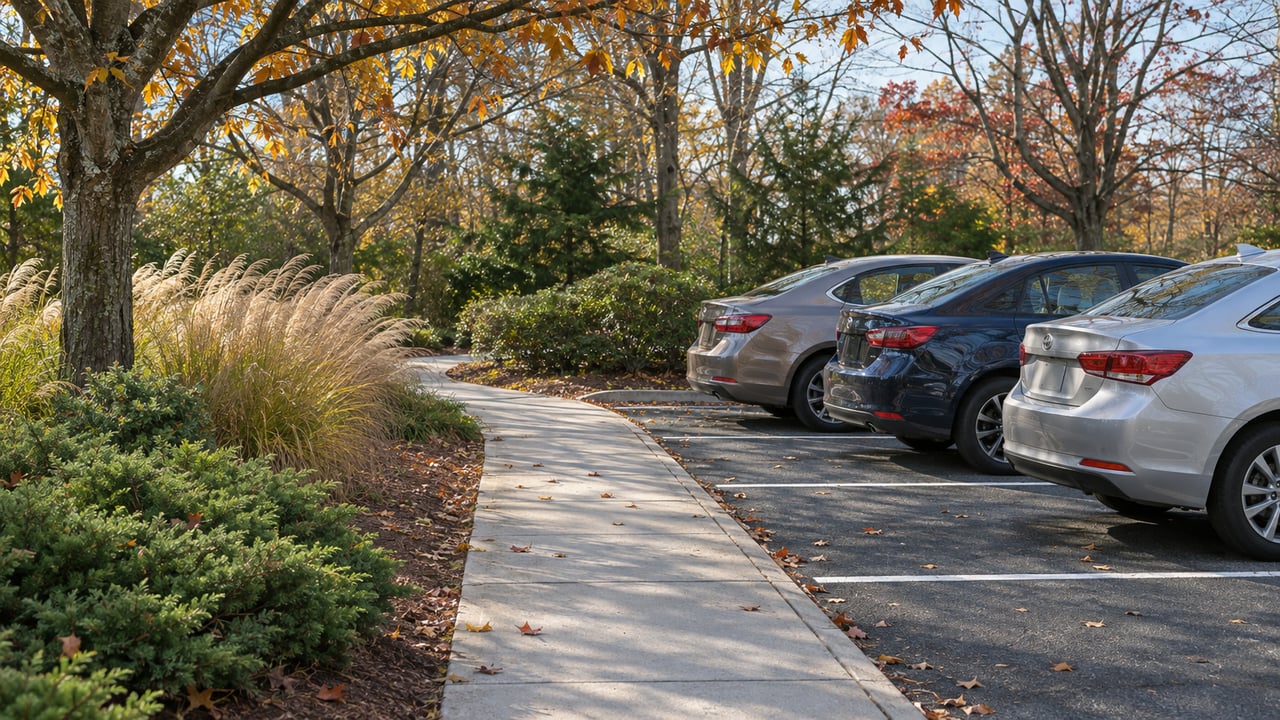
A West Windsor resident can park at Princeton Junction station for $180 a quarter in the Vaughn lots. A commuter from the next town over pays $504 a quarter for the same platform. Those are the West Windsor Parking Authority's 2026 rates. Over a year that comes to $720 against $2,016. If you're comparing towns along the Northeast Corridor, that gap is part of what a West Windsor address gets you, and it's much easier to collect than the station's famous waitlist would suggest.
You may have heard that it takes most of a decade to get a parking permit at Princeton Junction. That's true for one lot. The permit that counts for most buyers is a different one, and you can get it in about a month.
The eight-year wait applies to Wallace, and Vaughn has room
The Parking Authority gave the Township Council a presentation on April 27, 2026. As of April 1, it listed 500 people waiting for a Wallace permit, 223 waiting for the NJ Transit Alexander lot and 12 waiting for Vaughn. The slide sums it up plainly: "Wallace demand significantly exceeds supply. Up to an 8-year wait. Vaughn permits available within 4 weeks."
Wallace and Vaughn are both for residents only, and the car has to be registered at a West Windsor address. Wallace permits come with a waitlist. Vaughn permits are offered every month. Getting in line starts with a $75 deposit through the Parking Authority's application page. Of that, $65 goes toward your first permit payment and $10 is an administrative fee.
For a family closing on a house this winter, a Wallace permit is a long-term hope. A Vaughn permit is something you can count on. Run your numbers on Vaughn and treat Wallace as a bonus if your name ever comes up.
What the address is worth in dollars
Here are the resident quarterly rates for 2026:
- Vaughn: $180
- Wallace: $210
- An NJ Transit lot such as Alexander: $504
Nonresidents pay $504 a quarter. So a resident with a Vaughn permit pays $1,296 a year less than a nonresident at the same station.
That gap got much wider this year. NJ Transit announced on December 19, 2025 that starting January 15, 2026, its quarterly permits would go from $294 to $504 and daily parking from $7 to $12. The Parking Authority's presentation says it is contractually required to match NJ Transit's daily rate and nonresident permit rate in its own lots. Resident rates went up too. The presentation links that increase to lost revenue after Princeton University cut its permits from 800 to 200, plus higher operating costs.
The Authority also explained why resident permits cost what they do. It sells more permits than it has spaces, and its presentation says that without this oversell model, the resident permit would need to rise to about $304 a quarter. Even at that figure it would still be well below NJ Transit's $504.
Hybrid schedules change the math
The Parking Authority's presentation says permit sales have not fully recovered from the March 2020 drop. It also says hybrid work has caused a lasting shift toward part-time commuting and more daily parking. This is where the resident rate does the most for you.
Daily parking costs $12 in most lots. The limited daily spaces inside the Wallace permit lot cost $17 Tuesday through Thursday, and those spaces are first-come, first-served. At $12 a day, here's how many days of driving to the station it takes before each permit pays off:
- Vaughn: 60 days a year
- Wallace: 70 days a year
- Nonresident permit: 168 days a year
Say you go into the office three days a week for about 48 weeks. That's 144 days of daily parking, or about $1,728 a year.
As a West Windsor resident with that schedule, a Vaughn permit at $720 saves you about $1,000 a year compared with paying daily. A nonresident with the same schedule comes out ahead by paying daily, because their $2,016 permit only pays off for someone at the station more than three and a half days a week. The same commute costs one household $720 and another more than twice that, depending on which side of the town line they live on.
The train ticket is the bigger number
Parking is the cost you can control. The fare is the larger one. On NJ Transit's fare chart, effective July 1, 2026, a ticket from Princeton Junction to New York Penn Station is $19.50 one way, and a monthly pass is $549. NJ Transit's fare policy calls for 3% systemwide increases every July 1, starting in 2025.
At $39 a round trip, the monthly pass pays off at about 14 round trips a month. A three-day schedule lands close to that line. A twelve-month pass habit costs $6,588 a year at current fares. Scheduled direct trips on NJ Transit's trip planner run from about 53 minutes to about an hour and 29 minutes, so which train you take matters as much as which lot you park in.
Here's how the full year looks for a three-day hybrid commuter at 2026 rates, using 144 commuting days and one-way tickets:
| Commuter | Parking per year | Fare per year | Total |
|---|---|---|---|
| West Windsor resident, Vaughn permit | $720 | about $5,616 | about $6,336 |
| West Windsor resident, Wallace permit | $840 | about $5,616 | about $6,456 |
| Nonresident, paying daily | about $1,728 | about $5,616 | about $7,344 |
| Nonresident, quarterly permit | $2,016 | about $5,616 | about $7,632 |
The fare is the same for everyone in the table, so the parking column is the whole difference. These figures are general information drawn from published 2026 rates, not financial advice. Confirm current prices with the Parking Authority and NJ Transit before you build them into a budget.
The commute since November 16
There's also news on reliability. NJ Transit and Amtrak announced that both tracks of the new Portal North Bridge went into full service on Monday, November 16, 2026, retiring the 116-year-old swing bridge over the Hackensack River. The new bridge is a fixed span. It never has to open for boats, so river traffic no longer holds up trains. In NJ Transit's announcement, the agencies say they expect improved reliability and fewer bridge-related delays.
If you rode the line this fall, you felt the five-week cutover that came before it. During that period, single-track operation between Newark and Secaucus cut weekday Northeast Corridor service from 133 trains to 113. Regular weekday schedules came back on November 16. Buyers touring West Windsor this winter are seeing the corridor on its full schedule again, with the bridge that caused so many delays now gone.
Walking to the platform
For some West Windsor households, the parking math doesn't apply at all. Berrien City sits near Alexander Road and Scott Avenue, within walking distance of the station, and it received a new historical marker this year, according to Community News. The same report says the neighborhood's Princeton Gardens section was built mostly southeast of the tracks. The West Windsor Historical Society traces Sherbrooke Estates to the former Dey farm, which it describes as within walking distance of the train station. The Society's history says the farm's old airplane runway is now Sherbrooke Drive, and the land became Sherbrooke Estates by 1968. Avalon W Squared is a rental community right next to the station. Planet Princeton reported on the township's 2018 agreement for it as a transit village. NJ Transit's station page lists bike racks or lockers at Princeton Junction, which helps households a short ride away.
Add more parking to the picture as well. The Parking Authority plans to clean up the contaminated former bus garage site near the station and build a 42-space lot with a pocket park there.
Our West Windsor commute guide and West Windsor neighborhood page pick up from here. If you're also looking at the town next door, Plainsboro is worth comparing. Just remember that its residents pay the nonresident rate at Princeton Junction.
Frequently Asked Questions
Can a new West Windsor homeowner get station parking right away? As of April 2026, the Parking Authority said Vaughn permits were available within four weeks, with 12 people on that list. The Wallace lot had 500 people waiting and a wait of up to eight years.
What does daily parking cost at Princeton Junction? Daily parking was $12 a day in most lots in 2026, after NJ Transit's January 15 increase. The daily spaces in the Wallace permit lot cost $17 Tuesday through Thursday.
How much is a monthly train pass from Princeton Junction to New York? The adult monthly pass to New York Penn Station is $549 under NJ Transit's fares effective July 1, 2026.
If the train is part of why you're looking at West Windsor, tell us your office schedule and we'll go through which neighborhoods put you a short walk from the platform, which depend on a Vaughn permit, and how the yearly commute cost compares with the other towns on your list. Jersey Living Homes can help you weigh it house by house. Schedule a Free Consultation.