Wondering why Somerset County rents can feel all over the map? You are not imagining it. This is a higher-rent suburban market where the countywide numbers only tell part of the story, and the real differences show up when you look at property type, town, and lease terms. If you are planning to rent, lease out a property, or simply make sense of local pricing, this guide will help you understand what the Somerset County rental market looks like right now. Let’s dive in.
Somerset County rental market at a glance
Somerset County stands out as a relatively high-income suburban market with a housing mix that leans heavily toward ownership. According to the U.S. Census Bureau QuickFacts for Somerset County, the county has 135,054 housing units, a 74.3% owner-occupied rate, and a median gross rent of $2,033.
That owner-occupied share matters because it means renter-occupied housing makes up a smaller portion of the market than in many urban areas. In plain terms, rental supply is more limited, which helps explain why prices often run higher than many other parts of New Jersey.
The same Census source reports a median household income of $140,374, 635 building permits in 2024, and a mean travel time to work of 31.4 minutes. Together, those figures point to a commuter-oriented county where many renters are looking for practical access, space, and housing options that fit suburban lifestyles.
Asking rents versus occupied rents
One of the easiest ways to get confused by rental data is to compare numbers that measure different things. The Census median gross rent reflects occupied units collected through survey data, while listing websites usually report active asking rents for homes and apartments currently on the market.
For example, Realtor.com’s Somerset County market overview reported a median asking rent of $2,800 in December 2025, with 375 rental listings and a 0% year-over-year rent change. The same source also showed rental listings were down 14.98% year over year, which suggests fewer available options even as asking rents stayed flat overall.
That difference between $2,033 and $2,800 does not mean one source is wrong. It means the market snapshot depends on what is being measured. If you are a renter shopping today or an owner pricing a vacancy, asking-rent data is often the more practical benchmark.
Local rent differences inside Somerset County
County averages are useful, but they can also hide major differences between towns. In Somerset County, local pricing varies enough that your experience can change a lot from one municipality to another.
According to Realtor.com’s county overview, median rents were reported around $1,900 in North Plainfield, $2,500 in Hillsborough, $3,075 in Bridgewater, $4,000 to $4,200 in Montgomery, and $4,500 in Warren. That spread shows why renters and owners alike should avoid relying on a single countywide average.
If you are renting, this means your budget may stretch very differently depending on the town and housing type. If you are a property owner, it means pricing should be based on true local comparables, not broad county numbers alone.
What property types shape the market
Somerset County is not just an apartment market. Its housing stock is still dominated by suburban one-unit homes, which changes both renter expectations and landlord opportunities.
An ACS-based county housing profile included in Somerville’s revised housing element and fair share plan shows 57.7% of units were detached single-family homes and 14.6% were attached one-unit homes. The same report found that 3-bedroom units made up 27.2% of housing stock and 4-bedroom units made up 26.7%, reinforcing how important larger homes and family-sized layouts are in this market.
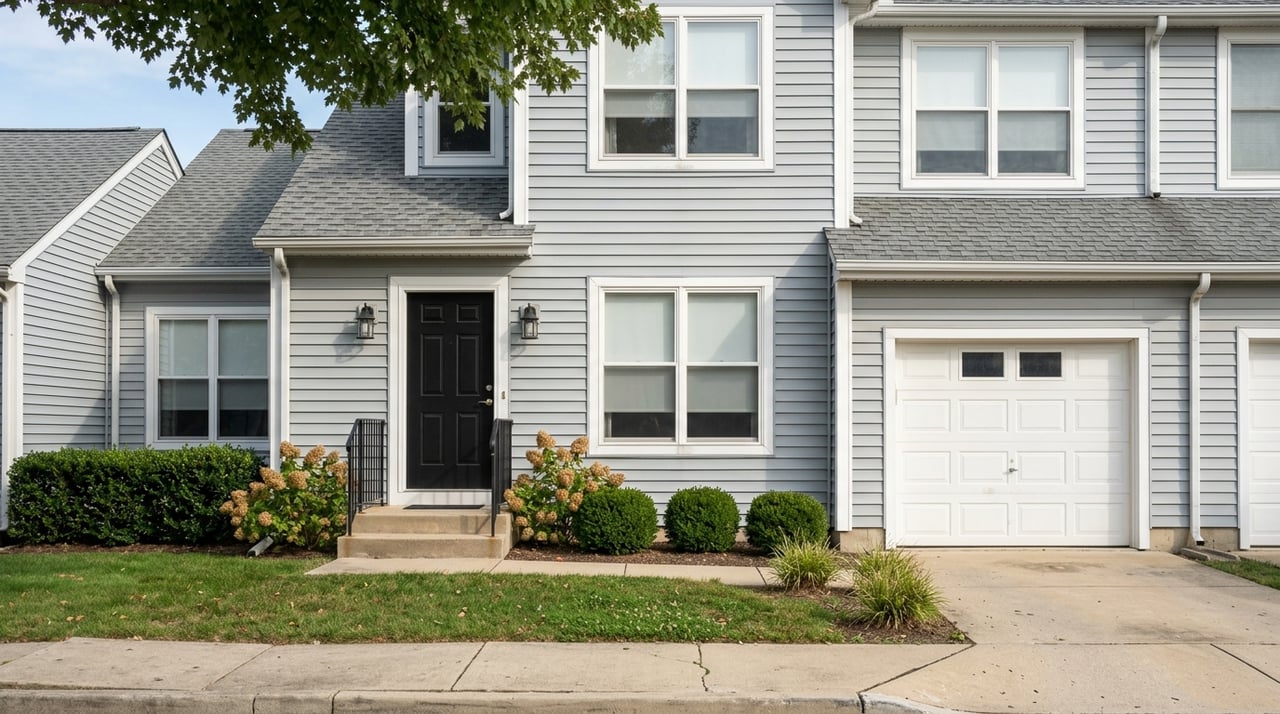
That helps explain why houses, townhomes, and larger condos often play such a central role in local rental activity. In Somerset County, many renters are not only comparing apartments. They are also weighing whether they can lease a townhouse or single-family home that offers more space and a different day-to-day lifestyle.
New supply is leaning multifamily
Even though the county’s existing housing stock tilts toward one-unit homes, newer supply is trending more toward multifamily development. That could gradually shape future rental options, especially for renters looking for apartment-style inventory.
The same ACS-based housing report notes that 63.8% of structures were built after 1970, which is relatively recent by regional standards. It also cites New Jersey DCA data showing 973 housing units certified in Somerset County in 2023, including 760 multifamily units and 213 1&2-family units.
That does not mean single-family rentals are becoming unimportant. It does mean renters may see more multifamily options over time, while owners of houses and townhomes may continue to benefit from a market where larger rental homes remain a meaningful part of local demand.
Typical rents by unit type
If you want a more detailed pricing picture, unit type matters just as much as location. Rentometer’s Somerset County rent data from March 29, 2026 shows how quickly rent levels rise as size increases.
Here is a simple breakdown of median asking rents by category:
| Unit Type | Median Asking Rent |
|---|---|
| Studio apartment | $2,008 |
| 1-bedroom apartment | $2,331 |
| 2-bedroom apartment | $2,895 |
| 3-bedroom apartment | $3,387 |
| 2-bedroom house | $2,500 |
| 3-bedroom house | $3,550 |
| 4+ bedroom house | $4,900 |
The broad takeaway is clear: 2- and 3-bedroom units sit near the center of demand, while larger houses command the highest rents. Rentometer also shows middle-50% ranges that reinforce how much variation exists even within the same bedroom count.
For example, a 2-bedroom apartment had a median of $2,895 with a middle range of $2,562 to $3,190, while a 3-bedroom house had a median of $3,550 and a middle range of $3,300 to $4,000. If you are comparing options, those ranges can be just as helpful as the median itself.
What renters should watch closely
If you are searching for a rental in Somerset County, it helps to think beyond the headline price. A listing may look competitive at first glance, but the real value depends on how the home compares with similar properties in the same town and category.
A few practical things to watch include:
- Town-level pricing differences that can change your budget range significantly
- Property type, since a townhouse or house may price differently than an apartment with the same bedroom count
- Inventory levels, especially when available listings are down year over year
- Lease structure, including renewal timing and notice periods
- Security deposit rules, which affect your upfront move-in costs
Because asking rents were flat year over year in the latest Realtor.com snapshot while listings declined, you may not see dramatic countywide price jumps. But fewer listings can still make the search feel competitive, especially in popular price bands or for larger units.
What landlords and rental owners should know
If you own a rental property in Somerset County, pricing is only one part of the job. Compliance, consistent screening, and lease administration matter just as much in New Jersey.
The New Jersey Department of Community Affairs landlord-tenant guidance explains that residential leases are commonly yearly or month-to-month. It also notes that many yearly leases require 60- to 90-day notice before termination, a month-to-month tenant must generally give one full month’s notice, and a yearly lease may become month-to-month if it ends and rent continues to be accepted.
The DCA bulletin on rent increases states that rent increases can only take effect at the beginning of a lease term. New Jersey has no statewide rent-control law, but municipalities may adopt local ordinances, so owners need to check the rules in the town where the property is located.
That same DCA guidance says the maximum security deposit is one and one-half months’ rent, annual increases are capped at 10% of the current deposit, and the deposit is generally due back within 30 days after tenancy ends. These are important details to get right because errors in administration can create problems even when a property is priced correctly.
Screening and placement need a consistent process
Tenant placement is about more than filling a vacancy quickly. In New Jersey, screening practices need to be consistent and legally compliant.
The state’s housing law page explains that the New Jersey Law Against Discrimination and related housing rules prohibit discrimination based on protected characteristics and source of lawful income, including rental subsidies such as Housing Choice Vouchers. The same source also notes that the Fair Chance in Housing Act restricts when criminal history may be considered in covered situations, generally after a conditional offer.
For owners, the practical lesson is simple: use written, consistent screening criteria and apply them the same way for every applicant. A clear process helps protect both your investment and your compliance.
If a property is subject to affirmative marketing or affordable housing requirements, the New Jersey Housing Resource Center states that those units must be posted there. The agency also notes that all landlords are welcome and encouraged to list available rentals through the platform.
The bottom line on Somerset County rentals
Somerset County is best understood as a higher-rent suburban rental market where micro-location matters. Countywide figures offer a starting point, but your actual experience will depend on the town, the size of the home, and whether you are looking at an apartment, townhouse, condo, or single-family rental.
For renters, that means focusing on local comparisons and being realistic about how far your budget will go in different parts of the county. For owners and investors, it means pairing market-based pricing with strong lease management and a compliant screening process.
If you want help navigating Somerset County rentals, whether you are looking for a home to lease or want support with pricing and tenant placement, connect with Rebecca Matyash. A local, data-informed strategy can make the process much smoother.
FAQs
What is the average rent in Somerset County, NJ?
- Somerset County rental data varies by source, but the U.S. Census Bureau reports a median gross rent of $2,033, while Realtor.com reported a median asking rent of $2,800 for active listings in December 2025.
Why are Somerset County rental prices different by town?
- Town-level pricing varies widely in Somerset County, with reported median rents ranging from about $1,900 in North Plainfield to $4,500 in Warren, so local market conditions can affect rent far more than county averages.
What unit sizes are most common in Somerset County housing?
- An ACS-based county housing profile shows 3-bedroom and 4-bedroom units are among the largest housing categories, which helps explain the strong role of larger homes and family-sized rentals in the market.
What are typical apartment rents in Somerset County?
- Rentometer reported median asking rents of $2,008 for studios, $2,331 for 1-bedrooms, $2,895 for 2-bedrooms, and $3,387 for 3-bedrooms in Somerset County as of March 29, 2026.
What should Somerset County landlords know about security deposits?
- New Jersey DCA guidance says the maximum security deposit is one and one-half months’ rent, with annual increases capped at 10% of the current deposit, and deposits are generally due back within 30 days after tenancy ends.
Are rent increases allowed in Somerset County rentals?
- Yes, but New Jersey DCA says rent increases can only take effect at the beginning of a lease term, and local municipal ordinances may limit the amount or frequency, so the specific town rules should be checked.